How Brorritos, a Mexican restaurant group in south London, swapped a huge folder and a stack of printed templates
for digital food safety records and never looked back.
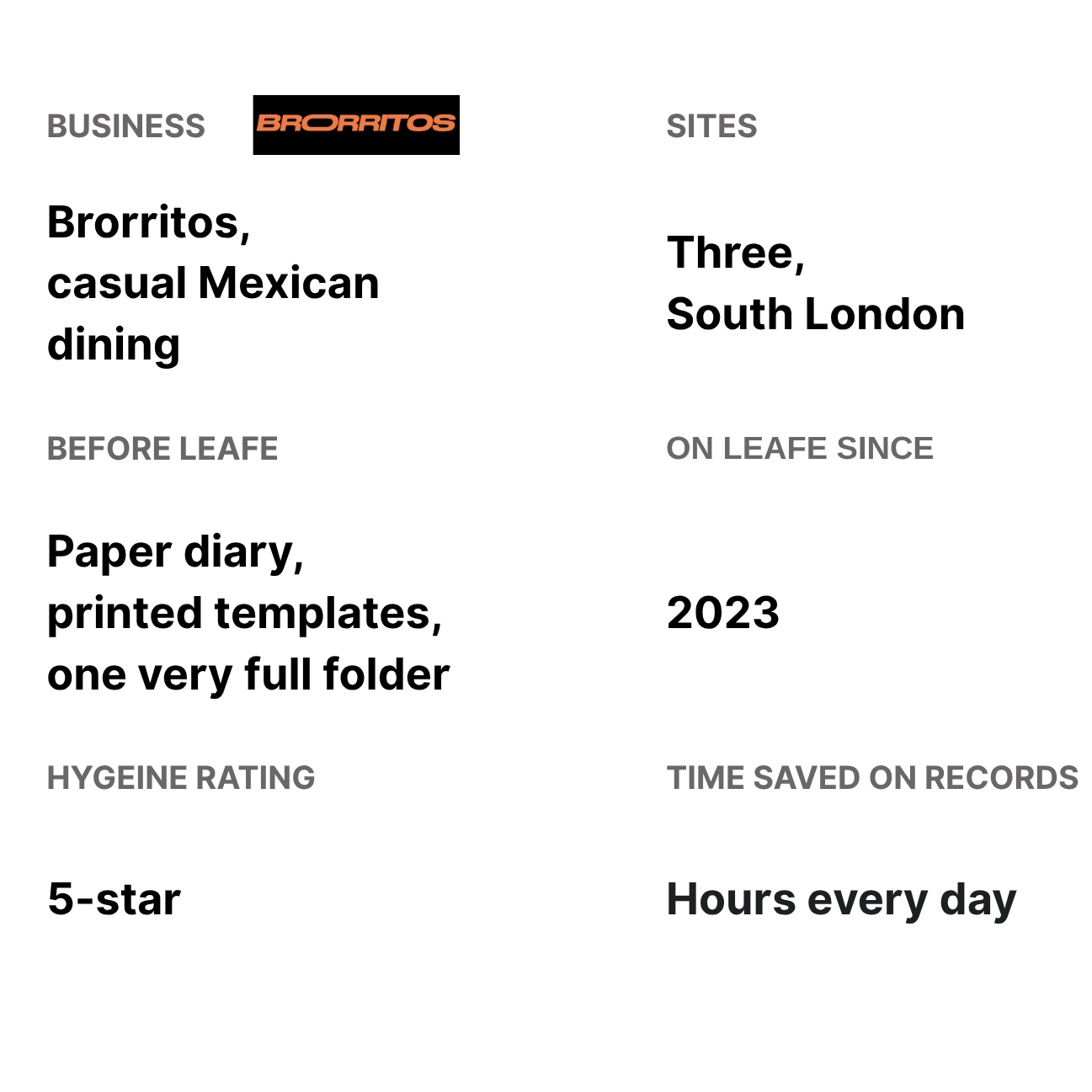
Brorritos Stats
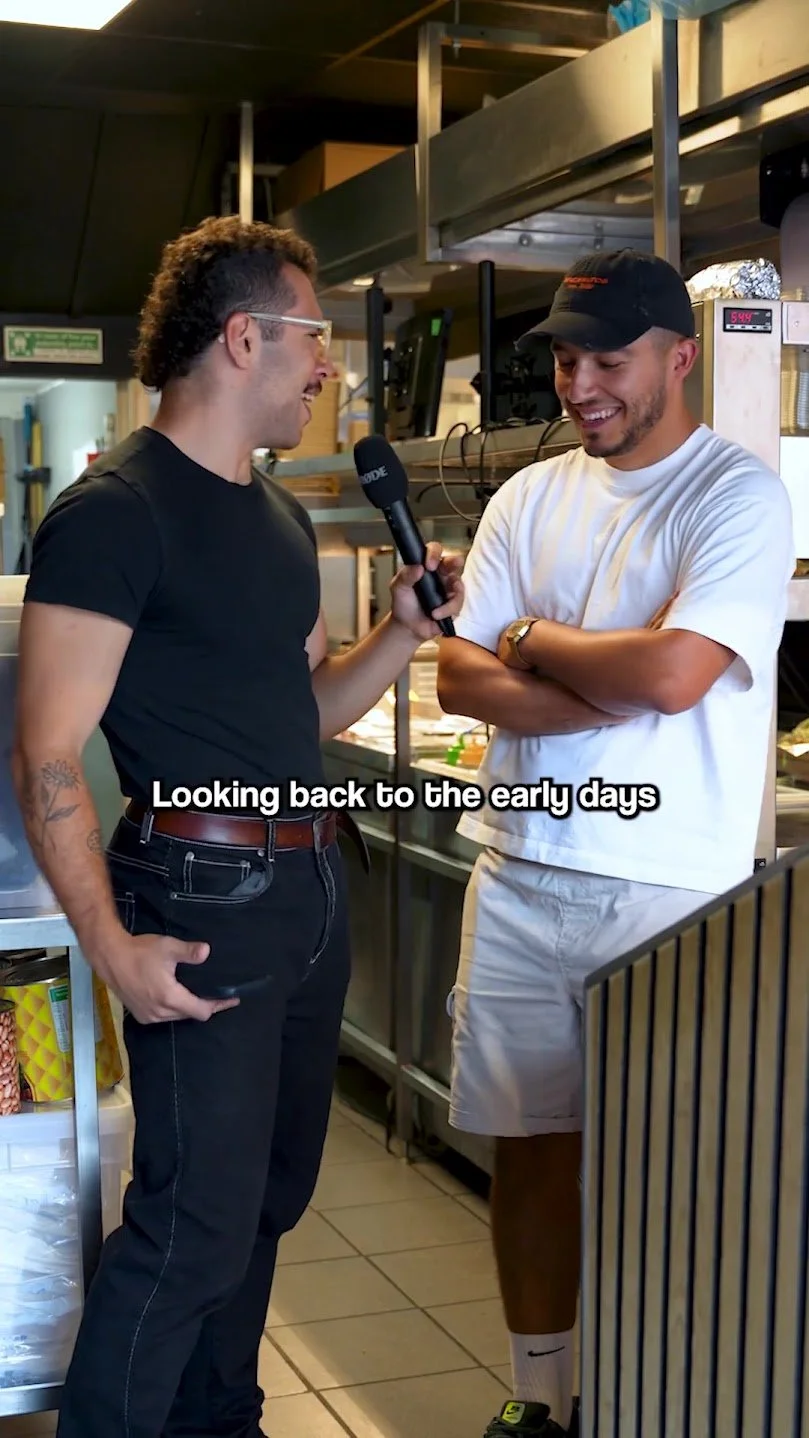
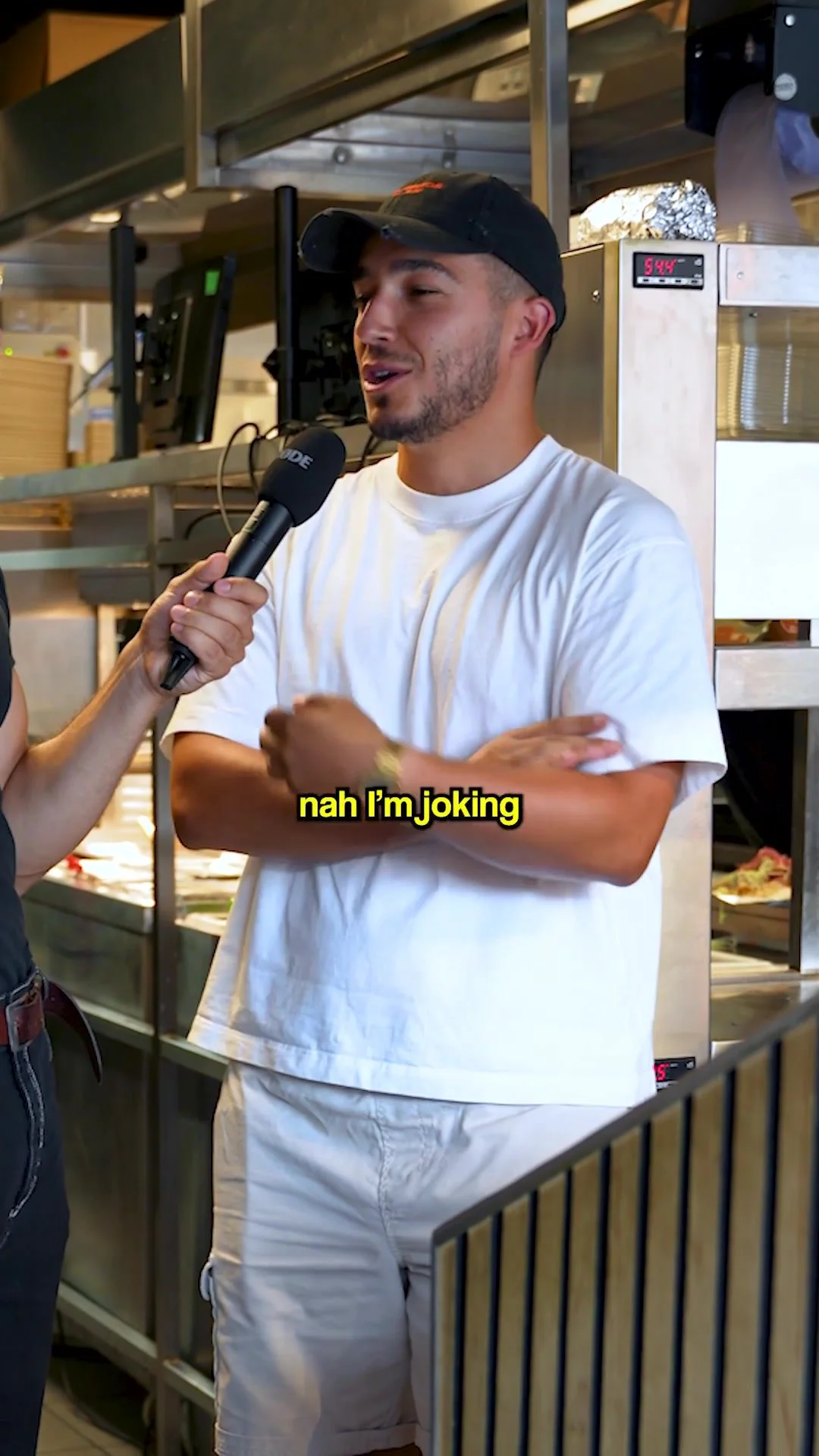
The inspection the made the decision for them
The trigger was an ordinary visit. The officer asked for six months of cooking and cooling records for one product line. They existed somewhere… across two folders and a box in the back of a second site…
It took most of a Saturday to reconstruct, and the reconstruction itself made Aaron uncomfortable. If it takes a day to prove what you did, you cannot honestly say you knew it at the time.
They trialled Leafe on one site the following week, with no training session and no rollout plan. The kitchen team worked it out on shift.
“They asked for six months of records. I found them, eventually. That “eventually” was the problem.”
Is it worth spending the extra money on it?
It is the question every single-site operator asks, and Aaron asked it too. Another monthly bill, on top of the ones already leaving the account, for something the paper diary technically already did.
Hi answer is a time answer not a software answer. The chef who used to spend the back of every shift catching up on records now finishes with the kitchen. The manager who used to drive between sites to check folders opens an app instead.
The part he did not expect was recruitment. New starters log temperatures correctly on their first shift, because the phone asks them for it as and when it happens.
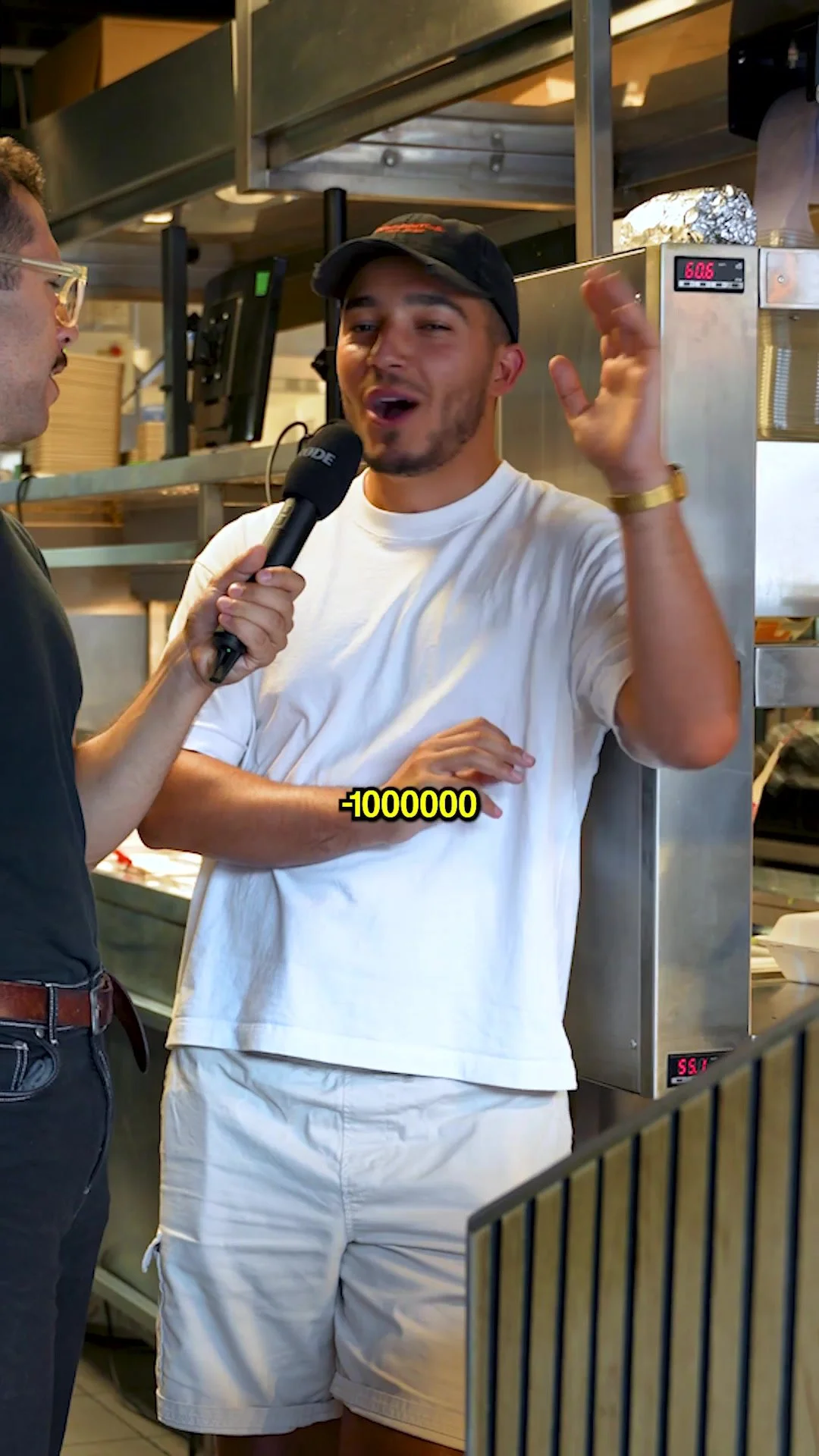
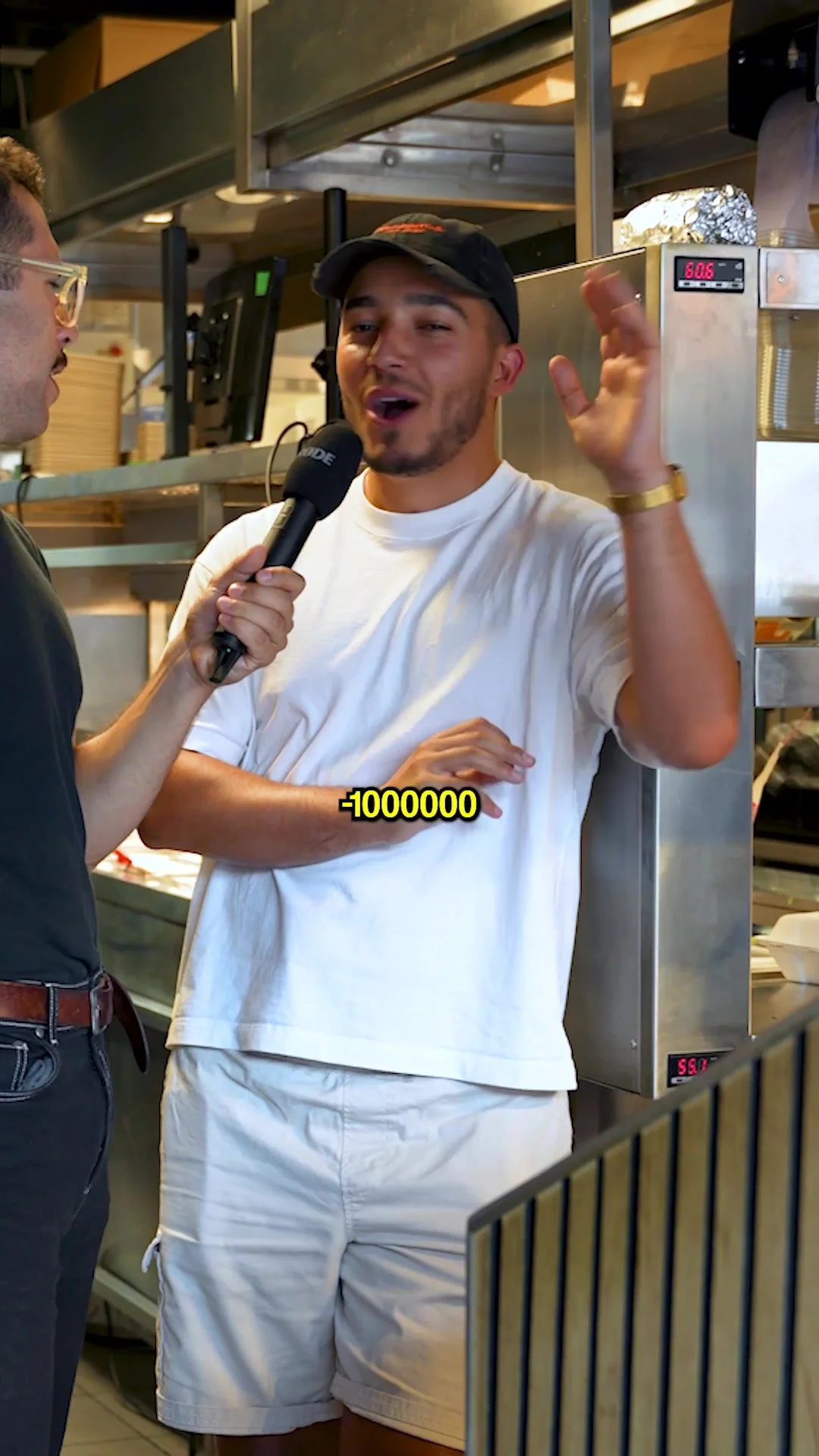
Out of ten? Minus a million
Asked how worried he’d be if an environmental health officer walked in tomorrow, Aaron doesn't need the folder, the printer or a Saturday morning. He needs his phone.
“Out of ten, how worried are you about an EHO visit now? Minus a million. I’d hand them the phone and carry on prepping.”
We started with pretty much no real knowledge
Brorritos began as one small unit with two people behind them. Nobody on the founding team had run a kitchen at scale before and food safety arrived the way it arrives for most first-time operators: as a laminated pack, a Level 2 certificate and a diary somebody hands you on day one.
The council was helpful. The paperwork was not. Aaron describes buying printed templates because it felt safer than inventing his own, then discovering that the templates assumed a kitchen with an office, a filing cabinet and somebody whose job was to file.
For the first two years the system worked because the business was small enough for one person to hold in their head. The moment a second site opened, that stopped being true.
“We started with pretty much no real knowledge. You get given a book, you fill in the book, and you hope the book is right.”
The problem with the book isn’t the writing, it’s the trusting.
A paper diary records what somebody wrote down, not what somebody did. Aaron is blunt about it: on a busy Friday, temperatures got written on the back of a hand and copied over later, if they got copied at all.
That gap is the thing that keeps operators awake. Not the fridge; the not knowing. A folder full of neat handwriting can be completely fictional and look better than a messy honest one.
“People can lie on it. If someone hasn't done a temperature reading, you can just write it on at the end of the day and cover yourself. That’s not really right.”
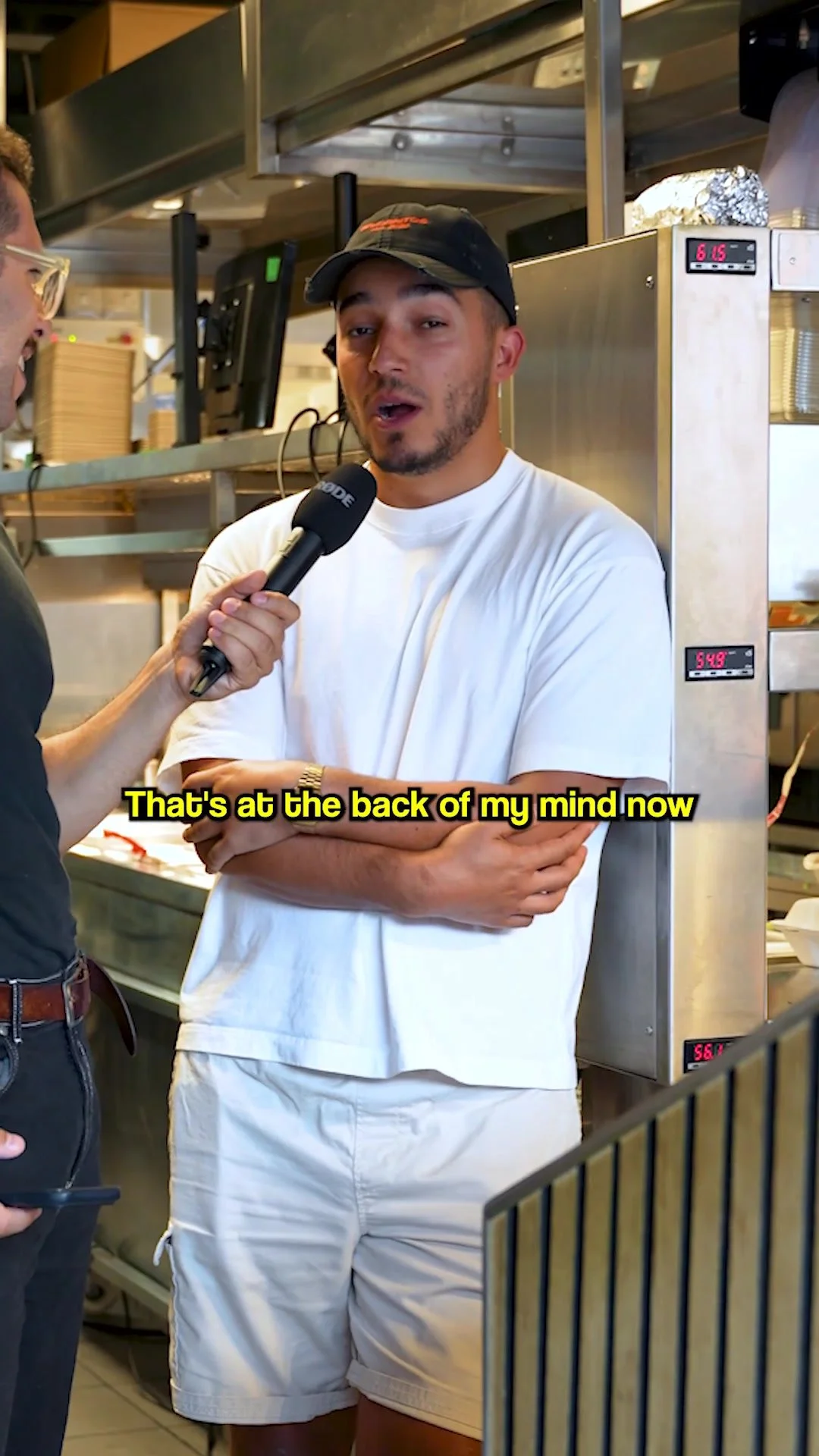
“Is it worth spending the extra money on it? Yes, because the alternative is paying someone else to write things down twice”
Run your kitchen the way Brorritos does
7 days free, no card needed. Multi-site groups get a hand with roll-out via a 15 minute call with a specialist.
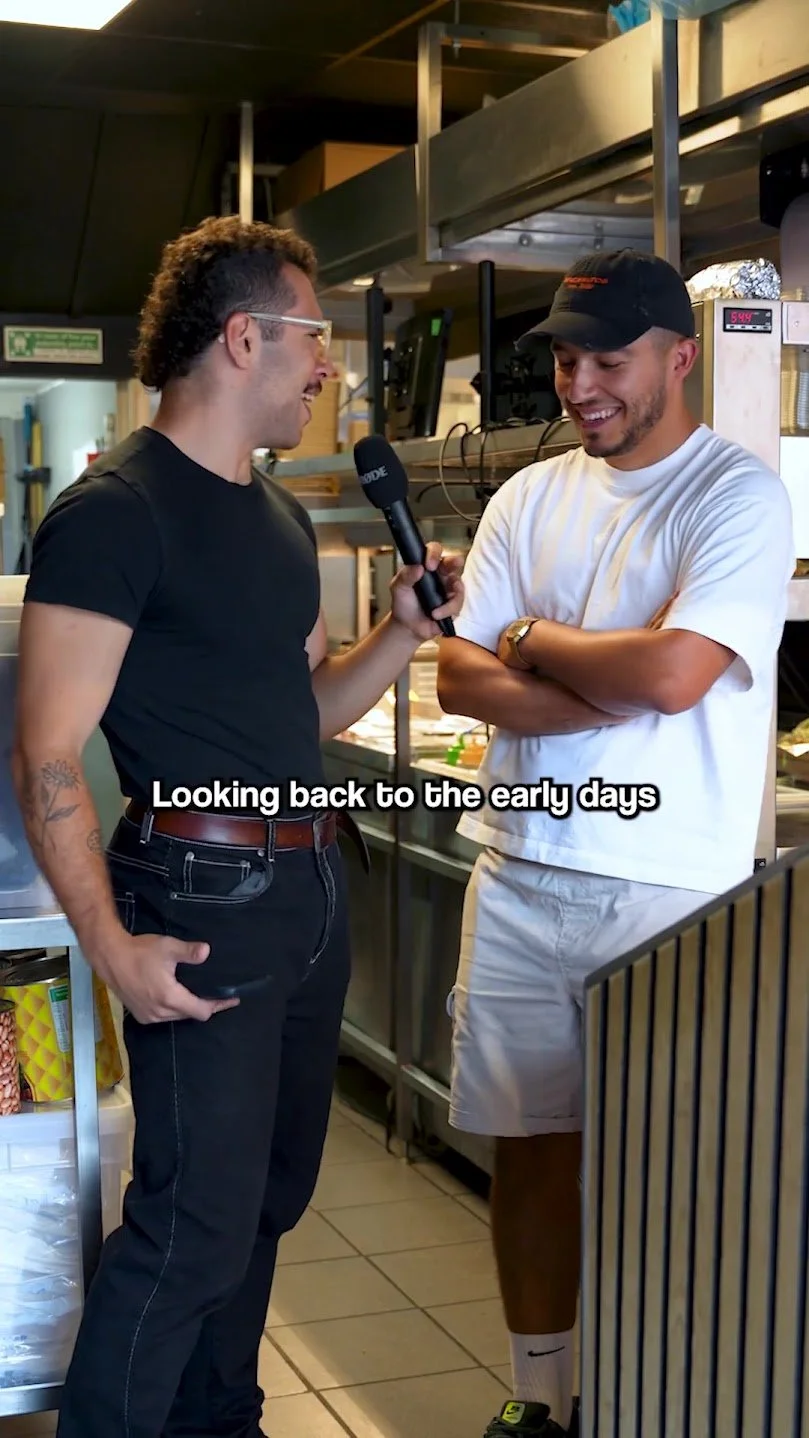
Watch the full conversation
More stories like this